
Cyprus History
Cyprus, the third largest island in the Mediterranean, has a history that stretches back more than 10,000 years — a crossroads of civilizations where East meets West. Its strategic location between Europe, Asia, and Africa has made it both a bridge of cultures and a prize for empires throughout history.
Ancient Cyprus
Human settlement on the island dates to the Neolithic period (around 9,000 BCE). By the Bronze Age, Cyprus had developed thriving trade networks, exporting copper — from which the island’s name is thought to derive — to neighboring regions. Around 1400 BCE, Mycenaean Greeks arrived, founding city-kingdoms and establishing Greek language and culture that still shape the island’s identity today.
Classical and Roman Eras
Cyprus came under Assyrian, Egyptian, and Persian control before being absorbed into Alexander the Great’s empire in the 4th century BCE. It later became part of the Roman Empire in 58 BCE, entering a long period of prosperity. The spread of Christianity began early here; tradition holds that St. Paul and St. Barnabas preached on the island, making Cyprus one of the first lands to adopt the new faith.
Byzantine and Medieval Periods
After the Roman Empire split, Cyprus became part of Byzantium and remained under Byzantine rule for nearly 800 years. In 1191, during the Third Crusade, Richard the Lionheart of England captured the island and sold it to the Knights Templar, who soon transferred it to the French Lusignan dynasty. This era saw the rise of feudal structures and the construction of medieval castles and cathedrals.
Venetian and Ottoman Rule
Venice took control in 1489, fortifying key cities like Famagusta and Nicosia. In 1571, the Ottoman Empire conquered Cyprus, ruling for over three centuries. Ottoman rule left lasting cultural and architectural traces and established the presence of a Turkish Cypriot community alongside the Greek Cypriot majority.
British Period and Independence
Britain assumed administration of Cyprus in 1878 and formally annexed it in 1914. Calls for enosis (union with Greece) intensified in the 20th century, leading to tensions between Greek and Turkish Cypriots and eventually to the island’s independence in 1960. The new Republic of Cyprus adopted a power-sharing constitution, but intercommunal conflict soon followed.
Division and Modern Era
In 1974, a coup by Greek nationalists prompted a Turkish military intervention, resulting in the island’s division — the Republic of Cyprus controlling the south, and the Turkish Republic of Northern Cyprus declared in the north (recognized only by Turkey). The capital, Nicosia, remains the last divided capital in Europe.
Today, the Republic of Cyprus is a member of the European Union (since 2004) and continues to thrive economically and culturally, famed for its hospitality, natural beauty, and enduring blend of ancient heritage and modern Mediterranean life.

Paphos Archaeological Park
Paphos Archaeological Park, located near Paphos Harbour in southwest Cyprus, is one of the island’s most impressive UNESCO World Heritage Sites. The park encompasses ruins from prehistoric times through the Middle Ages, with its greatest treasures dating from the Roman period.
Visitors can explore remarkably preserved mosaics in the Houses of Dionysus, Theseus, Aion, and Orpheus, famous for their vivid mythological scenes. The site also features ancient theaters, villas, temples, and tombs, offering a vivid glimpse into life in Greco-Roman Cyprus. Set against a backdrop of sea and sky, Paphos Archaeological Park is both a historical masterpiece and a stunning open-air museum.
Kourion Archaeological Site
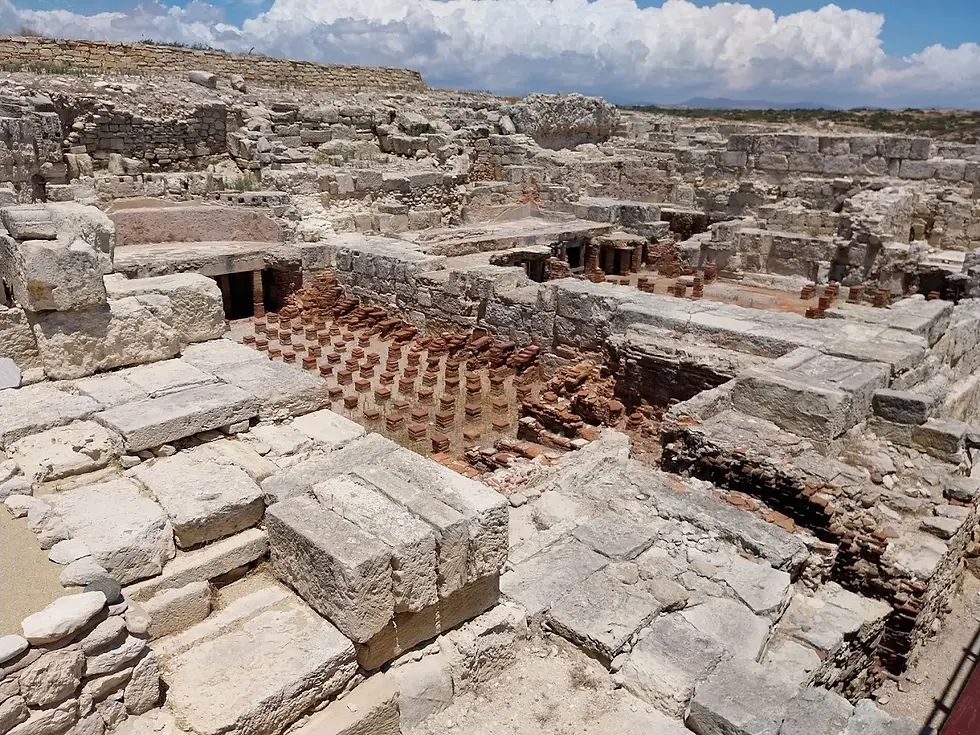
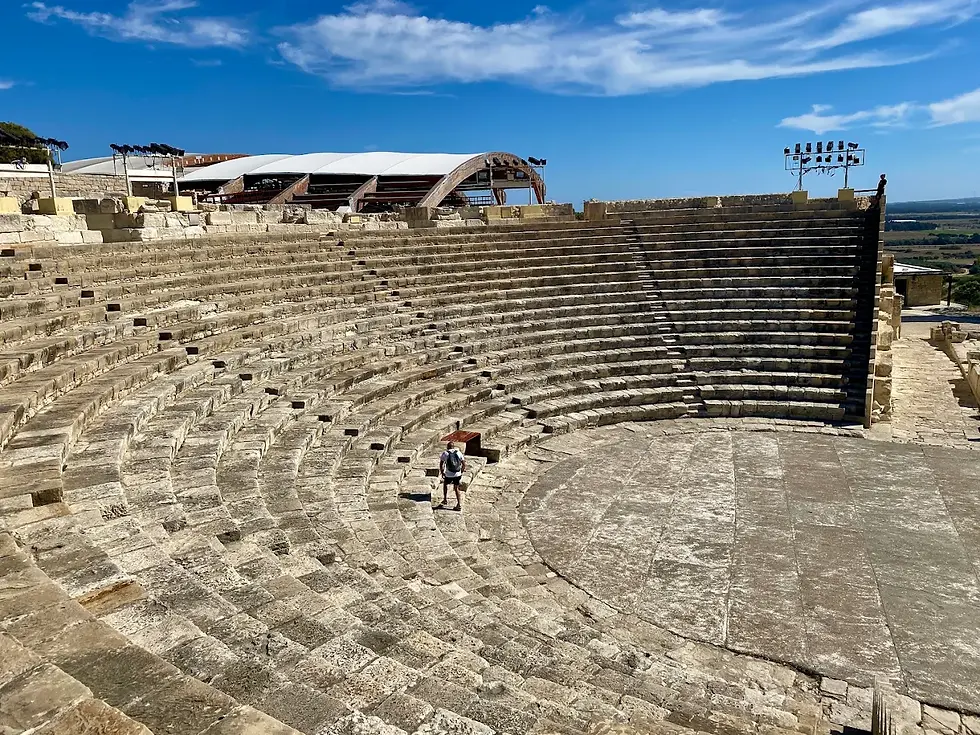
Kourion Archaeological Site, perched on a cliff overlooking the Mediterranean near Limassol, is one of Cyprus’s most spectacular ancient cities. Once a powerful city-kingdom, Kourion showcases impressive Greco-Roman ruins, including a beautifully restored amphitheater, intricate mosaic floors, and the remains of villas, baths, and an early Christian basilica.
The site combines rich history with breathtaking views, offering a powerful sense of how ancient Cypriots lived, worshipped, and celebrated. Kourion remains a highlight for history lovers and anyone drawn to the island’s classical past.